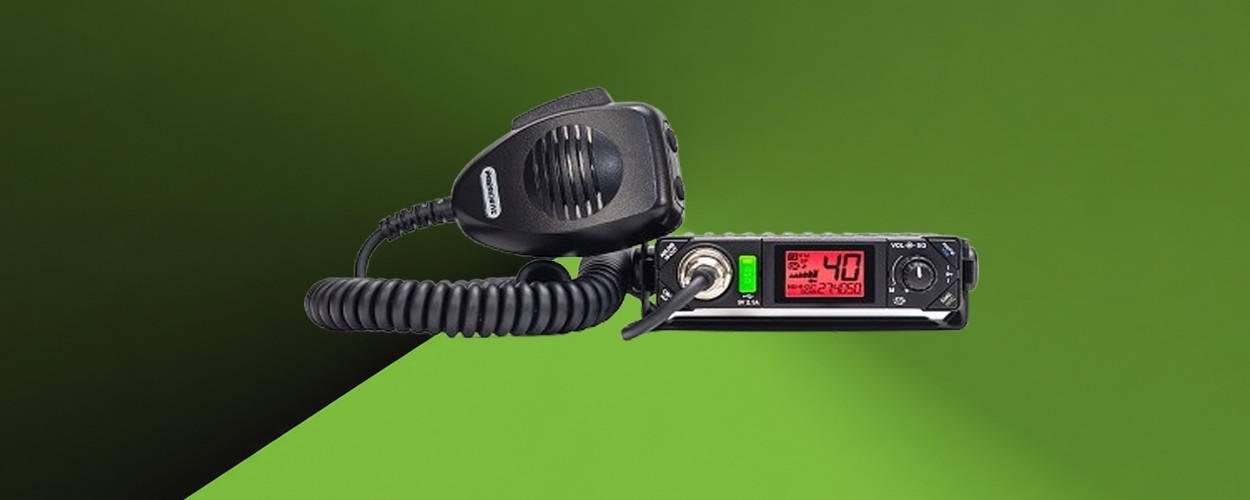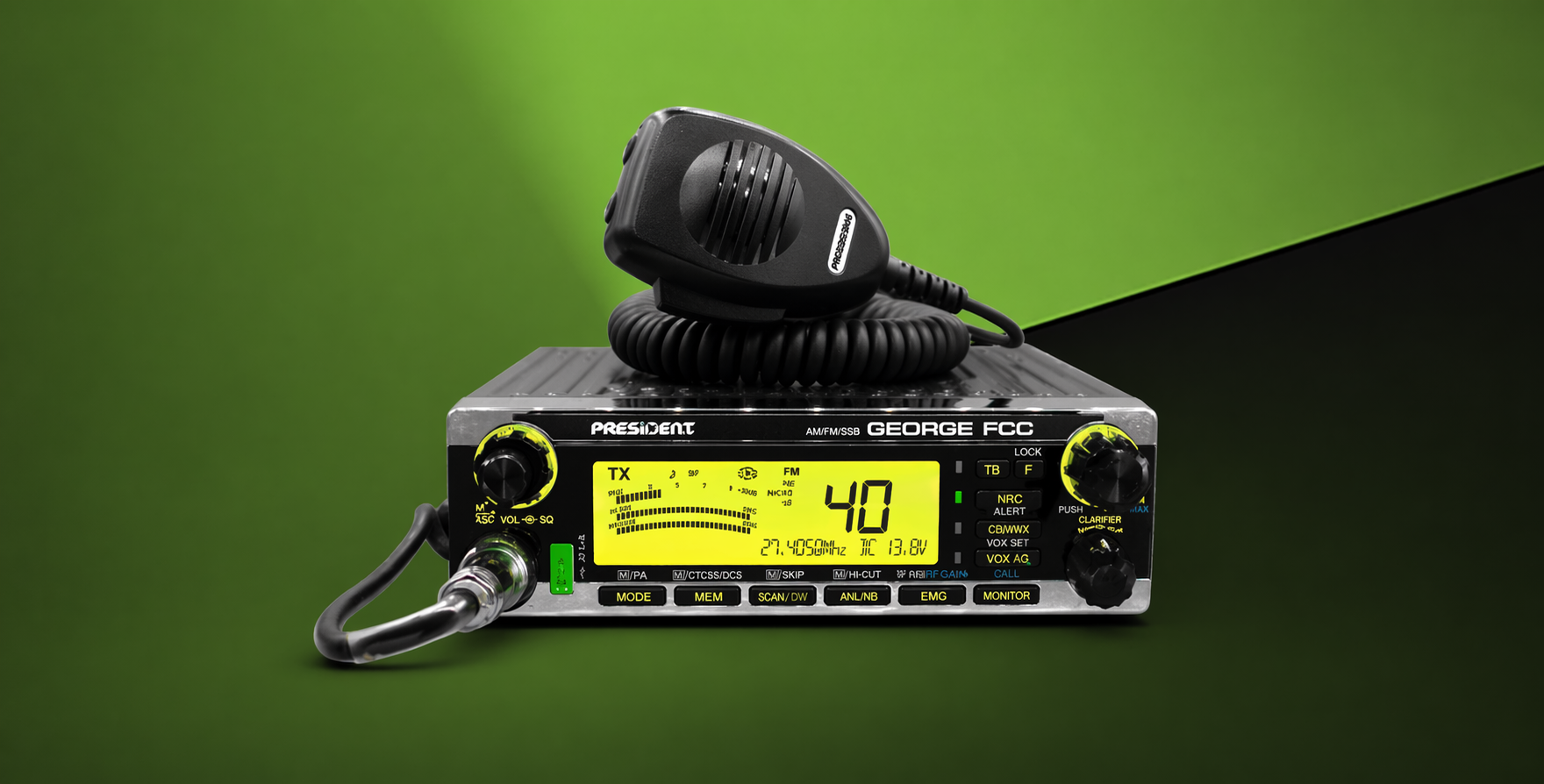
Can CB Radios and Walkie Talkies Communicate?
If you’re building a communication setup for your group, whether it’s for off-roading, job site coordination, or emergency preparedness, you might wonder if CB radios and walkie talkies can work together. After all, they both offer short-range communication without relying on cell service.
The short answer? No CB radios and walkie talkies cannot communicate with each other. They operate on different frequency bands, use different modulation methods, and are governed by separate FCC regulations, making them incompatible by design.
In this guide, we’ll break down why that is and help you decide which option best fits your needs.
CB Radio vs Walkie Talkie
Understanding the differences between a CB radio and a walkie-talkie is essential before choosing which system fits your needs best. These two devices serve similar purposes short-range communication but are built on completely different technology platforms and rules.
CB and Walkie Talkie Compatibility
Why They’re Not Compatible
| Feature | CB Radio | FRS/GMRS Walkie-Talkie |
| Frequency Band | 26.965–27.405 MHz (HF band) | 462–467 MHz (UHF band) |
| Modulation | AM / FM (sometimes SSB) | FM only |
| Antenna Type | Detachable/Upgradable | Fixed (FRS) / Detachable (GMRS) |
| Transmission Power | Up to 4W (CB) | 0.5W–2W (FRS); 5W–50W (GMRS with repeaters) |
| Interoperability | Not cross-compatible with UHF | Not cross-compatible with CB |
What You Can Do
| Scenario | Suggested Solution |
| Mixed group of Handheld /Mobile CB & Walkie users | Issue handheld CB radios to everyone who has GMRS/FRS radios so they can communicate with the handheld and mobile CB radio users |
| Mixed group of Handheld CB & Walkie users | Issue everyone CB radios, or everyone GMRS/FRS radios |
| Vehicle + on-foot communication | Use handheld CB radios compatible with vehicle CB units |
| Long-distance off-grid needs | Use CB (no license) or GMRS radios (license required) |
What You Cannot Do
The legality of using cross-band repeaters, custom-built interfaces, or dual/multiband transceivers depends heavily on which frequencies you’re bridging and the regulations governing each radio service (CB, GMRS, FRS, Ham, etc.).
However, it is not legal to bridge the gap between CB radios and walkie-talkies because:
- FCC rules prohibit linking different Part 95 services (e.g., CB ↔ GMRS).
- FRS radios cannot be modified, used with external antennas, or incorporated into repeater setups they’re strictly limited.
- GMRS allows repeaters, but only within GMRS bands, and only by licensed users.
In Short
- CB and walkie-talkies cannot communicate directly.
- They operate on completely different frequencies, use different hardware, and follow distinct regulatory rules.
- Custom-built repeaters bridging CB and GMRS or FRS are not legal under current FCC regulations, even with a GMRS license.
- For seamless group communication, it’s best to choose one radio type across all users.
Which Should You Choose?
- Pick a handheld CB radio if you want real range, zero licensing hassle, seamless use with vehicle CBs, and instant access to a nationwide community ready to help in an emergency.
- Handheld CB radios are a rugged, versatile, dependable choice for recreational use (remote hiking, backcountry camping, off-road convoys), job-site use (coordination with different teams) and that holds strong when cell service goes quiet.
- Choose FRS walkie-talkies for casual, short range use in safe areas (short hikes, frontcountry campgrounds and trails, family outings).
- Opt for GMRS radios if you want more power and flexibility just keep in mind the license requirement.
Why Choose a Handheld CB Over a Walkie-Talkie?
- Vehicle integration – CBs are widely used in vehicles, making handheld units perfect for people who need to jump between a truck and foot patrol.
- Better range over open terrain – The lower HF frequency of CBs performs better across hills, fields, and open land compared to UHF walkie-talkies.
- Established community – Truckers, off-roaders, and preppers commonly use CB, so there’s often someone listening when it counts.
- Consistent emergency channel – Channel 9 (preset channel) is reserved for emergencies, giving you a fallback when things go wrong.
- No license, no hassle – Unlike GMRS, you can use a CB right out of the box, legally and at full power.
Why the President Handheld CB Might Be the Smarter Pick
- Same size and weight as standard walkie-talkies, but with more versatility
- Offers both AM and FM modes giving you more control and clearer audio in varying conditions
- Fully compatible with vehicle-mounted CB systems perfect for off-roading, convoys, or trail coordination
- Multiple charging options available: direct battery charging, vehicle adapters, or rechargeable lithium-ion batteries (depending on the model)
- No license required, even at full legal power
- Effective in a variety of settings, especially for backcountry, rural or open-area communication where CB still dominates
- Rugged design built for long-term outdoor use
- Preset Channel 9 for quick access in emergencies
While CB radios and walkie talkies operate on entirely different frequencies and cannot communicate with each other, choosing the right communication system for your needs is key. If CB radios are the best fit for your group whether for travel, off-roading, or job site coordination be sure to explore President’s full lineup of reliable mobile and handheld CB radios designed for performance, durability, and ease of use.
❗ Disclaimer:
The information provided in this guide is for general informational and educational purposes only and does not constitute legal advice. It is not intended to serve as a comprehensive or definitive guide to radio communications regulations, practices, or equipment. This guide does not encompass all available radios, antennas or communication methods currently on the market. Users are advised to consult the most recent FCC regulations and applicable local laws prior to operating any radio equipment, particularly devices that require a license. Product specifications, availability, and regulatory requirements are subject to change without notice. Users are solely responsible for ensuring compliance with all applicable laws, regulations, and operational guidelines. While efforts have been made to ensure the accuracy of the information provided, the publisher makes no representations or warranties regarding the completeness, accuracy, or reliability of the content and shall not be held liable for any errors, omissions, or inaccuracies contained herein.