Tune Your CB Radio Antenna
If you want to get the most range and a clear signal from your CB radio, proper antenna tuning is essential whether you’re off-roading, trucking, or using it for emergency communications.
While many people refer to “tuning a CB radio,” the truth is that it’s your CB antenna that needs adjusting specifically, to achieve the optimal SWR (Standing Wave Ratio).
In this guide, we’ll walk you through how to properly tune your CB radio antenna using an SWR meter, explain why it’s important, and show you how to troubleshoot common issues.
Whether you’re using a CB antenna for a base station or a mobile setup, these tips will help you maximize transmission range and overall performance whether you’re on the road, out on the trail, or working at a job site.
Tools You’ll Need:
- SWR Meter (or a radio with built-in SWR function)
- Coax jumper cable (for SWR meter)
- Small screwdriver or hex wrench (for tuning antenna)
- Optional: RF Choke, Grounding Straps
CB Radio Range Improvement
Choose the Right CB Antenna for Maximum Range
When it comes to CB radio performance, your antenna matters more than the radio itself. A well-tuned, high-quality CB antenna will dramatically increase your transmission range, clarity, and overall reliability.
Why Antenna Tuning Is Critical? Your CB antenna must be properly tuned using an SWR (Standing Wave Ratio) meter to ensure efficient signal transmission and protect your radio. An unadjusted antenna, a damaged coax cable, or a disconnected antenna can cause poor performance or even damage your CB transceiver.
Key Factors When Choosing a CB Antenna:
- Antenna Length and Build Quality
- Antenna length directly affects range. A longer antenna typically offers better transmission and reception.
- A full-length 102-inch whip antenna provides the best possible performance for CB use. However, it’s not always practical for everyday setups.
- Most CB antennas are shorter than 102” yet still provide strong transmission when built with quality materials.
- A good-quality 20-inch CB antenna is sufficient for most users, especially for mobile setups.
- If using a cell antenna nearby, ensure your CB antenna is longer or mounted higher to avoid interference.
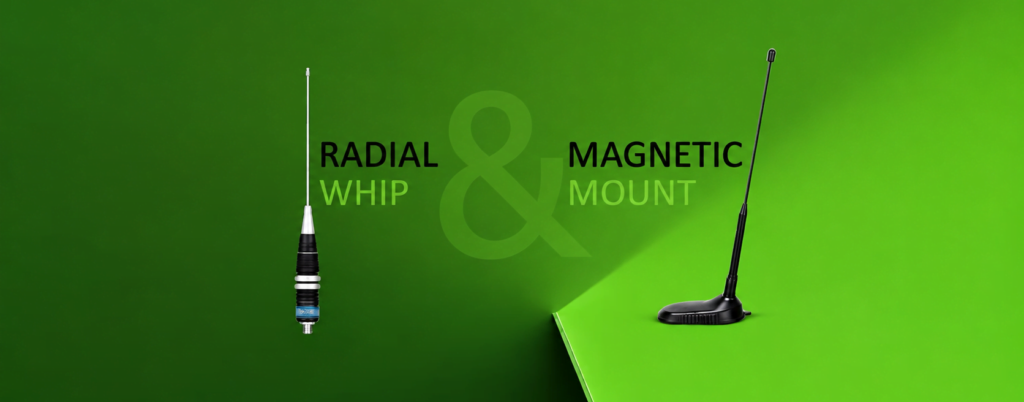
- Antenna Types: Magnetic Mount vs. Whip Antennas
- Magnetic Mount CB Antennas are easy to install with no drilling required. They are ideal for temporary setups or vehicles where permanent mounting isn’t practical.
- Whip/Radial Antennas typically offer better performance, however they require drilling or a more permanent mount. They provide more stability for off-road or high-speed use.
- Adjustable vs. Pre-Tuned Antennas
- Adjustable CB antennas let you fine-tune SWR for optimal performance.
- Pre-tuned CB antennas offer plug-and-play convenience but may still need minor SWR adjustment.
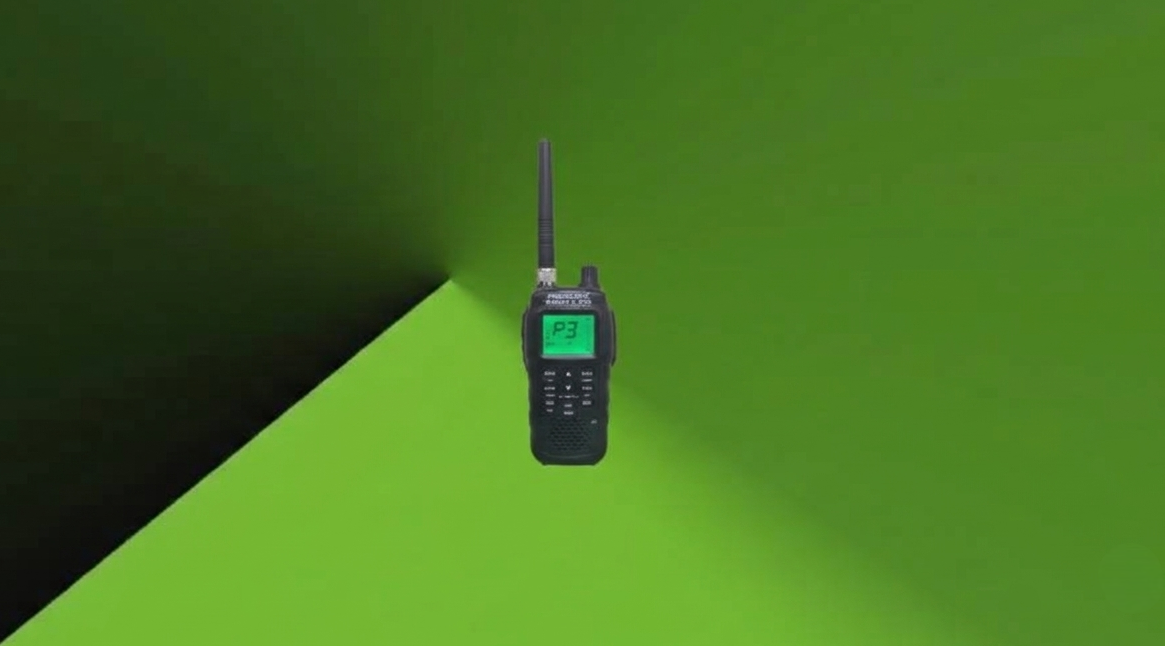
- Some rubber ducky antennas (e.g., President’s handheld CB radios) come pre-tuned and do not require calibration. These antennas are designed for optimal performance right out of the box, making them a convenient choice for users who want a no-fuss setup.
- Dual Antenna Setups (Co-Phased)
- Ideal for large vehicles, RVs, or semi-trucks
- Improve signal strength and side-to-side coverage
- Must be installed with correct spacing and tuned together
Installation Tip for Best Performance: Mount your CB antenna as high as possible and ensure it’s securely connected to a solid ground plane, such as the metal body of the vehicle. A proper ground plane helps reflect the radio signal effectively, which in turn improves transmission range and lowers SWR for better overall performance. For fiberglass or non-metallic vehicles, use a no-ground-plane (NGP) antenna.
Pro Tip: Visit our CB Antennas section for more in-depth information on SWR tuning, ground plane setups, and other antenna installation tips.
CB Antenna Tuning Guide
Set Up Your SWR Meter for Accurate CB Antenna Tuning
SWR (Standing Wave Ratio) measures how efficiently your CB antenna radiates the power from your radio. A low SWR means better transmission and less risk of damage.
How to Connect an SWR Meter:
- Use an external SWR meter or built-in meter if available.
- Disconnect the coax cable going from your radio to the antenna.
- Connect the SWR meter inline:
- The “Transmitter” (TX) port goes to your CB radio.
- The “Antenna” (ANT) port connects to the antenna coax
- Use high-quality coax cable (under 20 ft) with good shielding. Ensure all connections are clean and grounded.
- Make sure your CB radio is on and set to AM (or FM) mode.
Tune Your CB Antenna for Optimal SWR Goal
Your goal is to achieve an SWR below 2.0 (ideal: 1.0 – 1.5). Tune on channel 20, then compare with channels 1 and 40.
Take SWR Readings:
- Channel 20: Key mic → Check SWR. If the reading is well within the acceptable range, no further adjustment is necessary.
- If the SWR is high, try repositioning the antenna and ensure it has a solid electrical ground to the metal surface. Then, recheck the SWR. If the issue persists, continue with the following steps, as this reading alone will not indicate whether the antenna is too long or too short.
- Channel 1: Key mic → Record SWR reading.
- Channel 40: Key mic → Record SWR reading.
Interpreting SWR Readings:
- If the SWR is higher on Channel 1 than on Channel 40, the antenna is too short → Lengthen the radiating (exposed) portion of the antenna slightly.
- If the SWR is higher on Channel 40 than on Channel 1, the antenna is too long → Shorten the length of the radiating portion slightly.
How to Tune Your CB Antenna:
- Most CB antennas have adjustable tips via a screw, set screw, tuning ring or telescoping whip section.
- For magnetic mount CB antennas, repositioning can help reduce SWR.
- After each adjustment, recheck SWR on Channels 1 and 40.
- Repeat until both readings are close to or below 1.5.
Important: An SWR reading above 2.5 can damage your CB radio. Never operate your radio before making sure the antenna is properly tuned.
You are done!
Additional Tips for Maximum Performance
If your reading is still not satisfactory, please see below additional tips on how to improve your CB antenna tune-up.
Why Grounding Matters:
Proper grounding is essential for a low SWR, strong signal, and optimal CB radio range. A poor ground connection is one of the most common causes of weak transmission and high SWR readings.
CB antennas—especially vehicle-mounted antennas—rely on a solid ground plane to function properly. Without a proper ground connection, your antenna can’t efficiently transmit or receive signals.
- Mount the antenna on a clean, unpainted metal surface.
– Remove paint, rust, or coatings where the antenna base makes contact.
– A good electrical ground = better signal and reduced SWR. - Use a dedicated ground strap or grounding wire.
– Connect the antenna mount directly to the vehicle chassis or frame.
– Especially important for magnetic mounts or fiberglass body vehicles. - Bond vehicle panels with grounding straps.
– Use braided copper straps to bond the hood, cab, and bed.
– This creates a more consistent and effective RF ground plane, especially on trucks and RVs.
Use the Right Power Setup:
- Directly wire the radio to the battery for the cleanest power.
- Avoid interference by keeping wires away from ignition or alternator systems.
- Use a good fuse and clean connections to avoid voltage drops.
Reduce Electrical Noise:
- Use ferrite beads or chokes on leads or antenna coax.
- Turn off other electronics.
- Adjust squelch to filter background noise.
Use SSB Mode, if Available:
- SSB boosts range up to 3x compared to AM.
- Only works with other SSB radios.
Optimize Settings:
- Use RF gain based on signal strength and proximity.
- Enable NB/ANL to reduce static.
- Set squelch just past the noise floor.
Whether you’re looking for a convenient magnetic mount, a durable radial whip, or an adjustable/pre-tuned antenna for easy installation, President has been offering since 1978 high-quality, reliable radio and antenna solutions to meet a wide range of communication needs.
Now that you know how to tune a CB antenna, it’s a great time to explore President’s selection of high-quality CB antennas and radios.
❗ Disclaimer:
The information provided in this guide is for general informational and educational purposes only and does not constitute legal advice. It is not intended to serve as a comprehensive or definitive guide to radio communications regulations, practices, or equipment. This guide does not encompass all available radio antennas or installation methods currently on the market. Users are advised to consult the most recent FCC regulations and applicable local laws prior to operating any radio equipment, particularly devices that require a license. Product specifications, availability, and regulatory requirements are subject to change without notice. Users are solely responsible for ensuring compliance with all applicable laws, regulations, and operational guidelines. While efforts have been made to ensure the accuracy of the information provided, the publisher makes no representations or warranties regarding the completeness, accuracy, or reliability of the content and shall not be held liable for any errors, omissions, or inaccuracies contained herein.